
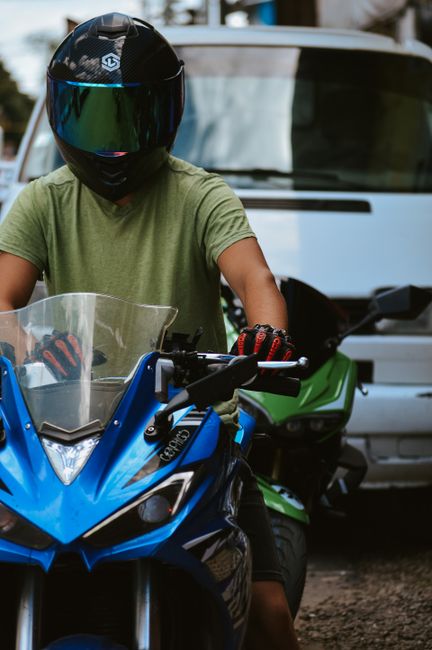
A motorcycle or scooter used on public roads in Red Bank, TN generally needs liability insurance or another legally accepted form of financial responsibility. The exact requirements depend on how the vehicle is classified, whether it is registered for road use, and where it is operated.
For most owners, a motorcycle insurance policy is the practical way to meet Tennessee’s requirements and protect against expenses that can follow a crash.
Does Tennessee require insurance for a motorcycle?
Yes. Tennessee requires vehicles driven on state highways to comply with the Financial Responsibility Law. The state specifically includes vehicles with regular motorcycle license plates in this requirement.
The minimum liability limits commonly used to satisfy Tennessee’s law are:
- $25,000 for bodily injury or death of one person in an accident
- $50,000 for bodily injury or death of two or more people in one accident
- $25,000 for property damage in one accident
These limits pay for injuries or damage caused to other people when the insured rider is legally responsible. They do not automatically pay to repair the rider’s own motorcycle or cover the rider’s medical expenses.
Tennessee allows certain alternatives to an insurance policy, such as an approved cash deposit, bond, or self-insurance arrangement. Those options are generally impractical for most individual riders, so a motorcycle liability policy is the usual method of complying with the law.
Do scooters need insurance in Tennessee?
Many scooters require insurance when they are registered and operated on public roads. Tennessee classifies certain two- and three-wheeled vehicles by engine size and design, and many scooters fall under the state’s motor-driven-cycle or motorcycle classifications.
A scooter with an engine between 51 and 125 cubic centimeters is generally treated as a motor-driven cycle for licensing purposes. Larger models may require a motorcycle license classification. A moped may also receive a motorcycle plate when titled and registered.
The engine size alone does not answer every insurance question. The key issues include:
- Whether the scooter is designed for highway or public-road use
- Whether it must be titled or registered
- Whether it has a motorcycle or other road-use plate
- Whether it is operated on public streets, private property, or trails
- Whether it is classified as a motorized bicycle, moped, scooter, or motorcycle
A small scooter is not automatically exempt from insurance requirements simply because it has a smaller engine. Before riding on public roads, the owner should confirm the vehicle’s Tennessee registration classification and make sure the insurance policy is written for that specific vehicle.
Is regular car insurance enough for a motorcycle or scooter?
Usually, no. A standard automobile policy generally covers cars and similar passenger vehicles, not motorcycles or scooters. Some policies may provide limited coverage for certain motorized vehicles, but assumptions can create serious gaps.
A motorcycle or scooter policy is typically designed to address:
- Liability for injuries and property damage caused to others
- Damage to the motorcycle or scooter from a collision
- Theft, vandalism, fire, falling objects, and severe weather
- Medical payments or other injury-related expenses, depending on the policy
- Damage caused by an uninsured or underinsured driver
- Custom parts, safety equipment, or accessories, when specifically covered
Coverage for helmets, riding gear, storage containers, passenger equipment, and aftermarket parts may be limited unless listed or addressed in the policy. A rider should not assume that a car policy, homeowners policy, or health insurance policy will fully protect the vehicle or the rider after a crash.
What does minimum liability insurance cover?
Minimum liability insurance is intended to protect other people from losses caused by the insured rider. For example, if a motorcycle rider loses control on a wet road and damages another vehicle, liability coverage may help pay for the other driver’s property damage, up to the policy limit.
If another person is injured, bodily injury liability may help address medical bills, lost income, and other covered claims for which the rider is legally responsible.
Minimum liability coverage does not normally cover:
- Repairs to the rider’s own motorcycle after an at-fault crash
- Theft of the motorcycle
- Damage from hail, fire, or vandalism
- The rider’s own injuries beyond any applicable medical-payments coverage
- Personal belongings carried on the motorcycle
Tennessee’s minimum limits may be lower than the total cost of a serious crash. Medical treatment, vehicle replacement, and legal expenses can exceed those limits quickly. Riders with substantial savings, regular passengers, expensive equipment, or significant daily mileage may need to consider limits above the legal minimum.
What coverage is useful beyond the legal minimum?
Collision coverage can help pay for damage to the insured motorcycle after a crash, subject to a deductible. Comprehensive coverage generally addresses non-collision losses such as theft, fire, vandalism, wind damage, or contact with an animal.
Uninsured and underinsured motorist coverage can be particularly relevant to motorcycle riders. A crash caused by a driver with no insurance or insufficient limits may leave the injured rider facing medical and other costs. This coverage can help, subject to the policy terms and applicable law.
Medical payments coverage may help with certain medical expenses after a crash, regardless of fault, up to the selected limit. It does not replace health insurance and may not cover every expense.
Loan or financing agreements often require comprehensive and collision coverage even though Tennessee law primarily requires financial responsibility for liability. If the motorcycle is totaled while a loan balance remains, optional gap coverage may also be relevant, depending on the agreement and policy.
Does homeowners insurance cover a motorcycle stored at home?
Usually, not in the same way it covers household belongings. A motorcycle or scooter is generally excluded from standard homeowners or renters coverage for road-use losses. A policy may provide limited protection for certain accessories or personal property, but that is not the same as insuring the vehicle itself.
A motorcycle kept in a garage can still be stolen, damaged by fire, or vandalized. Storage location may affect the policy, but it does not replace a motorcycle policy if the vehicle is ridden on public roads.
What local conditions should riders consider?
Seasonal riding conditions can change risk in the community. Heavy rain can reduce traction, leaves and debris can collect along road edges, and sudden temperature changes may affect pavement and tire performance. Rural stretches, higher-speed roads, and areas with frequent turning traffic can create different hazards than short neighborhood trips.
A scooter used for occasional errands may have a different exposure than a motorcycle ridden daily, carried with a passenger, or used for longer weekend trips. Insurance information should accurately reflect:
- Who rides the vehicle
- Whether passengers are carried
- Approximate annual mileage
- Where the vehicle is stored
- Whether the motorcycle is used for commuting, recreation, or work
- Any modifications, custom equipment, or added accessories
Misstating how a motorcycle or scooter is used can create problems when a claim is filed.
What happens if a rider has no insurance?
A rider who cannot show financial responsibility after a qualifying traffic stop or crash may face fines, registration consequences, and other penalties. Tennessee uses electronic insurance verification, so coverage generally needs to be connected to the correct vehicle identification number rather than existing only as a general policy for the driver.
A rider should keep acceptable proof of insurance available and make sure the policy remains active before operating the vehicle. Insurance coverage on a car does not necessarily satisfy the requirement for a separately registered motorcycle or scooter.
The practical answer is straightforward: if a motorcycle or scooter is titled, registered, and operated on public roads in Tennessee, the owner should expect to need vehicle-specific liability coverage. The right policy depends on the vehicle’s classification, how it is used, the rider’s financial exposure, and the protection desired beyond the state minimum.
